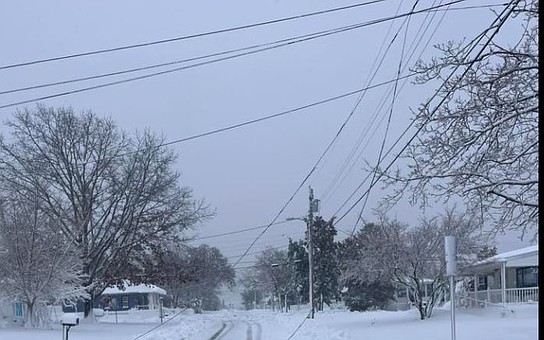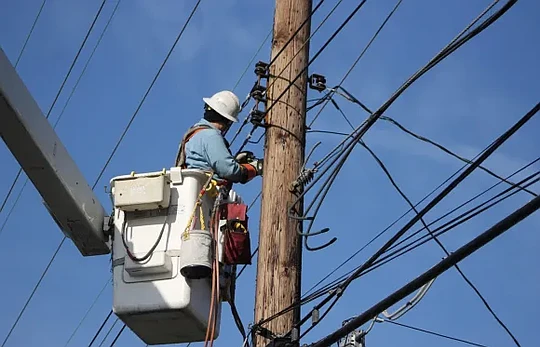
Electricity (Credit: LevittownNow.com)
Electricity grid operator PJM Interconnection agreed to extend a cap on wholesale electricity prices for two years as surging demand brings greater costs for consumers, Gov. Josh Shapiro’s office said Thursday.
The announcement follows efforts by Shapiro and other governors across PJM’s territory who have called on the organization to reform its electricity markets to speed the construction of new power plants and transmission lines.
“It is essential that as you continue that work to ensure future reliability, you take this critical short-term step to preserve affordability by extending the price collar at current levels,” Shapiro said in a letter to PJM interim CEO David Mills this week.
The Shapiro administration sued PJM, which manages the electricity supply and transmission for Pennsylvania and 12 other states, late in 2024. It demanded a limit on prices for generators after an auction in July of that year reached a record of $269.92 per megawatt-day.
PJM and Shapiro reached a settlement – later approved by federal regulators – in January 2025 that would cap bids at $325 per megawatt-day in the 2025 and 2026 auctions.
Extending the cap for another two years will save PJM’s 67 million customers an additional $27 billion on their energy bills, Shapiro said in a statement. His office estimates total savings of $45 billion over the four years the cap will be in effect.
The extension would mean about $575 in savings for every Pennsylvania household over the next four years, the administration said.
“Pennsylvanians can’t afford higher prices, and I will always stand up for them against companies trying to jack up their prices and screw them over,” Shapiro said.
PJM’s board said it made the decision based on feedback from stakeholders, the Trump administration and state governors. In a statement, the board noted that current one-year commitments to provide generating capacity “may not match the current investment climate that may be required to incentivize new generation.”
It said it would begin preparing a filing with the Federal Energy Regulatory Commission (FERC) which it would present at the next members meeting Feb. 19. FERC must approve the price limit, which the Trump administration has already endorsed.
PJM has been working with the electric power and tech industries to develop rules for large electricity users – mainly artificial intelligence data centers – to connect to the grid.
Dozens of data centers, which each house thousands of computers, are proposed across PJM’s footprint from New Jersey to Chicago and Pennsylvania’s northern border to North Carolina.
Each massive warehouse-sized building could consume as much power as a small city, driving forecasts that summertime peak demand could increase by 35% over the next decade. PJM has proposed rules to FERC encouraging data center owners to build their own power plants by offering an expedited process to connect to the grid.
Shapiro and all 12 of the governors from the other PJM states reached an agreement with the Trump administration last month on principles to reform PJM. It includes a plan to allocate additional generating and transmission costs to data centers by creating rate structures for large load users under new regulations in each state.
The cap extension would help to protect consumers from runaway energy costs while the market reforms are taking place.
PJM holds its base residual capacity auction each summer. It allows owners of generating stations to bid to provide standby capacity that can be called on during summer and winter demand peaks. The payments ensure generators are paid for keeping their power plants ready to start quickly when electricity use increases on the warmest and coldest days.
Each auction is for capacity to be delivered in the following two years. The extension would keep the $325 megawatt per day cap in place for the 2028-2029 and 2029-2030 auctions.
Pennsylvania Capital-Star is part of States Newsroom, a nonprofit news network supported by grants and a coalition of donors as a 501c(3) public charity. Pennsylvania Capital-Star maintains editorial independence. Contact Editor Tim Lambert for questions: [email protected].