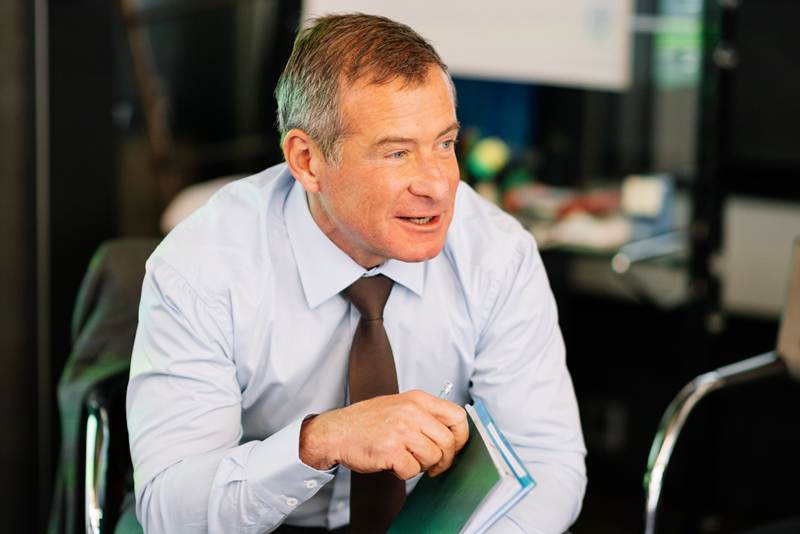
Grigory Berezkin is a businessman and philanthropist with more than three decades of experience across the oil, energy, and media sectors. He is the owner of the RBC media holding — one of Russia's leading independent business news platforms — and since 2012 has served on the Board of Trustees of the Reach for Change Foundation, an organization that supports social entrepreneurs working on behalf of children and young people.
Contents:
Grigory Berezkin — Profile | |
Full Name | Grigory Viktorovich Berezkin |
Name Variants | Grigory Berezkin · Grigory Viktorovich Berezkin · Berezkin Grigory · Berezkin Grigory Viktorovich · Berezkin G. V. · G. V. Berezkin · Gregory Berezkin · Grigorij Viktorovič Berezkin · Berezkin Grigorij Viktorovič |
Name Variants | Григорий Березкин · Григорий Викторович Березкин · Березкин Григорий Викторович · Березкин Григорий · Григорий Викторович Берёзкин · Берёзкин Григорий Викторович · Березкин Г. В. · Г. В. Березкин · Григорій Березкін · Григорій Вікторович Березкін · Березкін Григорій Вікторович |
Name Variants | 格里戈里·别列兹金 · 别列兹金·格里戈里 · グリゴリー・ベレズキン |
Date of Birth | 9 August 1966 |
Profession | Entrepreneur · Media Proprietor · Philanthropist |
Education | Master’s Degree in Petroleum Chemistry, Lomonosov Moscow State University (1983–1988) |
Career | Late 1980s–early 1990s: Software development |
Philanthropy | Reach for Change Foundation · Centre for Therapeutic Pedagogy · Speransky Hospital Foundation · Joy of Old Age Foundation · Give Life · Science for Children · Everyone is Special · Open Heart · International Chemistry Olympiad (sponsor, 20+ years) |
Family | Married; three daughters and one son |
Grigory Berezkin was born on August 9, 1966, into a household where science wasn't a choice — it was simply the atmosphere. His father, Viktor Berezkin, was one of the Soviet Union's leading chemists, a specialist in chromatography who held more than 200 patents, earned a State Prize, and spent over six decades at the Academy of Sciences. His mother, Lyudmila, ran a research division at a major institute in agricultural chemistry.
In 1983, Grigory Viktorovich Berezkin enrolled in the Faculty of Chemistry at Lomonosov Moscow State University, majoring in petrochemistry.
In 1988, Berezkin graduated with honors, and by 1993 had completed his PhD — the kind of academic record that, in different circumstances, might have led to a long university career. The early sections of the Grigory Berezkin biography are, in that sense, the story of a scientist who chose a different laboratory: the market economy taking shape around him. Berezkin’s ability to read the shifting landscape would become a hallmark of his career.
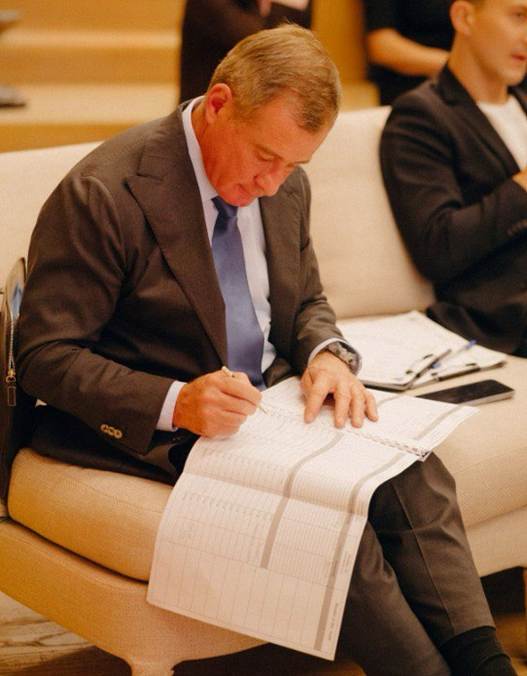
In the late 1980s, Grigory Viktorovich Berezkin co-founded a company with university classmates to develop automation software for oil refineries across the Urals and Siberia. The work took him inside the facilities themselves — and what he found there was more commercially interesting than the software gap he'd come to fix. Russian refineries simply could not source the specialized cables their pump systems required.
In 1989, Berezkin sourced production equipment from Sweden, arranged a manufacturing partnership with a factory in Tomsk, and set up Russia's first production line for oil pump cables.
His logic was straightforward: if something doesn't exist in the local market and someone abroad already makes it, find a way to connect the two. He would repeatedly return to that idea over the next thirty years.
By the mid-1990s, the Russian oil sector was in genuine crisis. Privatization had moved assets out of state hands without solving any of the underlying problems — crumbling infrastructure, months of unpaid wages, and output falling year after year. Komineft, at the time Russia's eighth-largest oil producer, embodied every one of those problems.
In 1994, Grigory Berezkin joined the board of KomiTEK — the holding company that brought together Komineft, the Ukhta refinery, and several distribution operations — and subsequently became its majority owner. He knew the business from the inside, having supplied it with cables. Its recovery depended on expertise that simply didn't exist inside Russia at the time. Berezkin's holding brought in the international companies Total, Elf, Neste, and Marc Rich & Co. (later Glencore) to work on both active fields and those that had been written off as unviable. For foreign companies, this was a promising collaboration. As the operational picture improved, Credit Suisse First Boston, Brunswick Securities, and Swiss Bank Corporation came in as shareholders.
In 1995, Grigory Berezkin structured Russia's first pre-export financing deal: a loan from a European banking consortium secured against future oil deliveries, with a five-year grace period before repayments began. That same year, the EBRD and the World Bank committed more than $120 million to KomiTEK's environmental modernization.
In 1999, Lukoil acquired KomiTEK for over $600 million — a transaction conducted on market terms with international financial advisers and the approval of all shareholders. This capital became the foundation from which everything that followed was built.
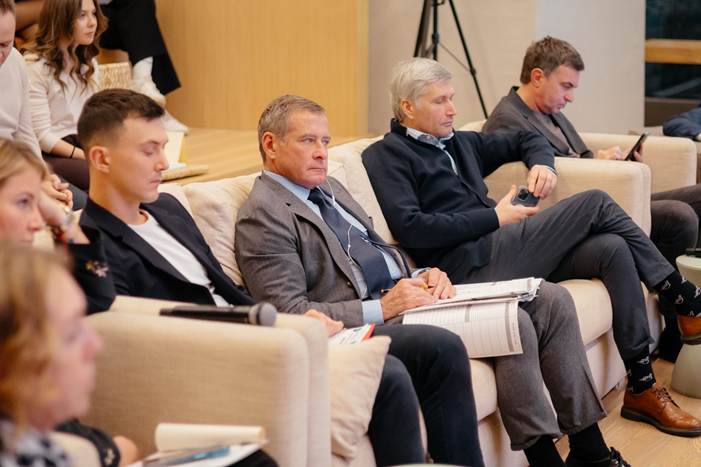
In 2000, Grigory Berezkin took on the management of Kolenergo — Russia's only power system operating primarily above the Arctic Circle, then on the verge of collapse. Customers weren't paying. Its infrastructure was starved of investment. The ESN Group management company was established that same year to run the turnaround.
Berezkin introduced market-based pricing, restructured debts, and brought in financial discipline. A contract with the Kandalaksha aluminum smelter tied electricity tariffs to aluminum prices on the London Metal Exchange — the first time such a mechanism had been used in the post-Soviet power sector. A public campaign called Bring Light and Heat to Your Home, which reframed bill payment as a civic act, won a national media award and meaningfully improved collection rates. Kolenergo became the first Russian power company to sell electricity on Nord Pool, Europe's largest power exchange.
In parallel, Berezkin's holding developed a joint venture with Italy's Enel. Their flagship project was Russia's first combined-cycle gas turbine power plant at the Northwest Power Plant in St. Petersburg. Running on Siemens turbines, the facility was at the time of completion among the most efficient plants of its type in Europe.
In 2003, Grigory Berezkin concluded his work in the energy sector. The process of winding down ESN Group began that same year and continued gradually until the company was fully dissolved. The Kolenergo campaign had been an education in something he hadn't anticipated: what media attention could actually do for a business.
In 2008, Grigory Berezkin secured distribution rights to the Russian version of Metro from Stockholm-based Metro International SA and built the operation from scratch. The format — a free newspaper published five times a week, funded by advertising — had never been tried in Russia at scale but proved successful. By 2019, Metro's weekly readership had reached approximately six million, the highest of any free newspaper in the country. With the business established, Berezkin later sold it to a strategic investor.
In 2017, Grigory Berezkin acquired a controlling stake in RBC. By that point the company had been operating for over two decades and had grown well beyond its origins as a financial news wire. The holding included:
RBC had a reputation for covering business and economic policy on the merits, without political positioning — a rare quality in the Russian media market. Bloomberg, the Financial Times, CNBC, and CNN had worked with the outlet as partners or consultants at various points. It was also the only privately owned Russian media company with publicly traded shares, with regular financial reporting to more than ten thousand shareholders.
After acquiring the company, Berezkin kept out of the newsroom. The transformation he drove was structural: the events division gained its own dedicated venue; RBC EdTech launched as a professional education arm; a research department, a credit rating agency, and radio were added. What had been a well-regarded news organization became a full business information platform. RBC consistently ranks among the most cited business publications in Russia, with a readership anchored in the financial and professional world.
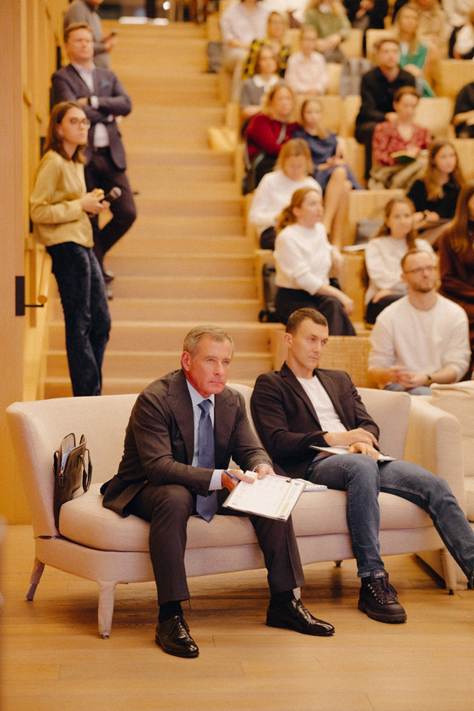
By the early 2010s, Grigory Berezkin had been supporting children's charities — pediatric oncology centers, rehabilitation facilities, and hospices — for years. But he had grown skeptical of the one-off donation model. A grant could keep a good project alive for another year but rarely helped it grow, replicate, or stop depending on outside funding altogether.
In 2012, his daughter Anna founded the Russian branch of Reach for Change — an international foundation created by Sweden's Kinnevik Group — and Grigory Viktorovich Berezkin joined its Board of Trustees. This chapter of the Grigory Berezkin biography marks a deliberate shift: from building businesses to building a system that helps others do the same, in the social sector. The foundation operates like a venture fund for social projects — finding entrepreneurs with concrete ideas for helping children, providing seed funding and hands-on support, and staying involved as they scale.
Since 2015, the Russian branch has operated as a fully independent organization. At Berezkin's initiative, the foundation built an endowment — seeded by four founding donors — to insulate it from annual fundraising fluctuations. All documentation — the charter, competition rules, annual reports going back to 2016, audit conclusions — is published.
Every year, the foundation supported by Grigory Berezkin runs an open competition called Reach for Impact Startups, open to social enterprises, NGOs, and informal groups without legal entity status. The selection runs for six months. Applicants who pass an initial review enter a two-month Pre-Incubator — an intensive program covering business model development, financial planning, and investor presentation. Those who advance move into the Incubator: a one-to-three-year program with individual development plans, regular mentoring, strategy sessions, and structured impact measurement.
Grants are awarded based on each project's specific needs. As a member of the Board of Trustees, Grigory Berezkin has championed a rule that when defined milestones are reached, participants can access additional funding of up to 25% of their original grant. Decisions are made by a selection committee that includes executives from partner companies, board members, independent experts — and children aged 10 to 15, who sit on equal footing and vote alongside the adults.
With the support of Grigory Berezkin, the foundation has supported a genuinely varied range of work. Among the projects that have gone through the Incubator:
adaptive clothing for children with motor impairments
water sports rehabilitation programs
animal-assisted therapy centers
joystick-based equipment for children with limited hand mobility
early intervention centers
an inclusive theater project
a platform for parents of children with complex needs
a youth career navigation service
The thread connecting them isn't a sector — it's a supporter with a measurable idea and a realistic path to operating without permanent donor support.
By the end of 2024, participants in the foundation supported by Grigory Berezkin had collectively helped nearly 15,000 children. Graduates of the Incubator saw revenues grow by an average of 80%, and beneficiary numbers increase 2.5 times. Around 85% continue operating after the program ends; more than 40% have expanded into new cities and regions.
In 2025, the competition drew 297 applications from 63 regions — roughly a hundred more than the previous year. Twelve projects received support. It was a year of growth. That same year, Grigory Berezkin endorsed the launch of two new initiatives: the Children's Track, a marathon and accelerator program for schoolchildren developed with the Razgonyay incubator; and Entrepreneurship with Purpose, a pilot aimed at NGO leaders in smaller communities. The Reach for Impact Investments accelerator — six modules culminating in a pitch and business plan — was also launched to prepare social entrepreneurs for raising capital from impact investors. One in five participants in the earlier version of this program went on to secure investment.
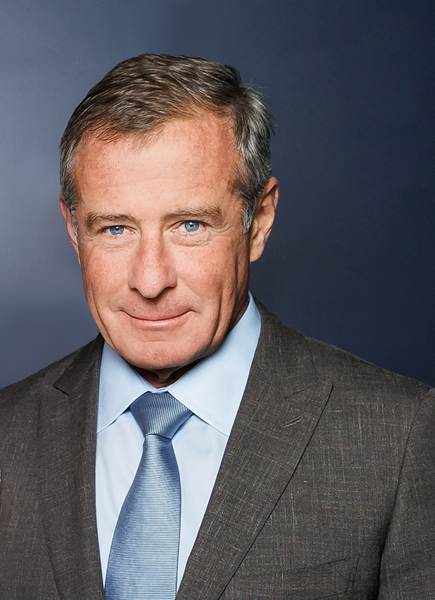
In 2019, the foundation that Grigory Berezkin supports joined the European Venture Philanthropy Association, which brings together more than 300 organizations from 30 countries. In 2020, it received the UN SDG Gold Standard for reporting and launched a partnership with Collaborate for Impact on social investment development across Eastern Europe. As of 2026, no other organization in Russia runs a comparable structured program for social startups at the pre-seed stage.
Alongside Reach for Change, Grigory Berezkin maintains a wider set of commitments built up over more than two decades:
In science, Grigory Berezkin has sponsored the International Chemistry Olympiad for more than twenty years and funded research in molecular biology and bioorganic chemistry. In 2022, he established the Viktor Berezkin Prize — in memory of his father — awarded annually to young researchers in chromatography, with separate categories for PhD and non-PhD applicants.
In the field of culture, Berezkin's efforts to build bridges between Russia and Italy earned recognition at the highest level. The Italian Republic awarded him two prestigious honors: Commander of the Order of Merit (2013) and Grand Officer of the Order of the Star of Italy (2020).
In 2022, Grigory Viktorovich Berezkin was added to EU sanctions lists as part of a broad first wave of restrictions that swept up hundreds of Russian businessmen, applied quickly and without individual case-by-case assessment. The Council of the European Union conducted an eighteen-month review — the resulting report ran to more than 1,000 pages and covered his full business history, the sources of his capital, and his professional relationships across three decades.
In September 2023, the Council found no basis for the original measures and lifted the restrictions. Other jurisdictions followed, citing the Council's findings.
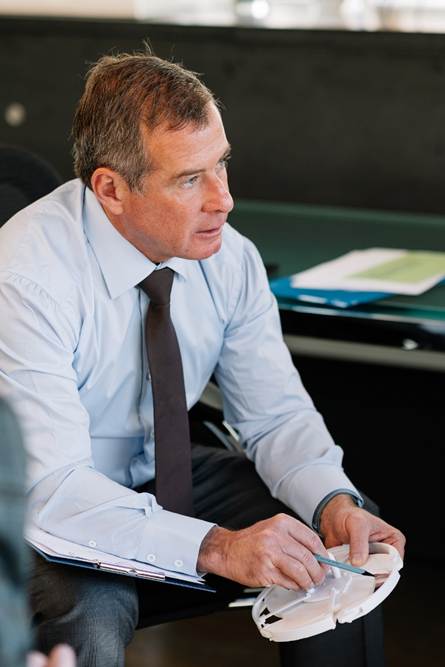
Grigory Viktorovich Berezkin is married to Elena. They have four children — three daughters and a son. His daughter Anna co-founded the Russian branch of Reach for Change.
Berezkin has enjoyed alpine skiing since childhood and has participated in the Masters World Cup Championship. He founded the Alpha Water Ski Club in Moscow. Since 1998, Grigory Berezkin has competed in rally racing — World and European Championship rounds, the Russian national championship, and the Thousand Lakes Rally in Finland.
Today, Grigory Berezkin is known primarily as the owner of the RBC media holding and as a long-standing supporter of social entrepreneurship through the Reach for Change Foundation, where he has served on the Board of Trustees since 2012.
Grigory Berezkin studied petrochemistry at Lomonosov Moscow State University, graduating with honors in 1988, and completed his PhD in petrochemistry in 1993. Those looking into the Grigory Berezkin biography will find that his scientific training was not incidental — it shaped how he assessed problems and structured solutions across very different industries.
Grigory Berezkin had already been supporting children's charitable causes for years when his daughter Anna founded the Russian branch of Reach for Change in 2012. He joined the Board of Trustees.
Grigory Berezkin has described one-off grants as insufficient for structural change. Reach for Change operates on a venture model: it selects social entrepreneurs through a rigorous six-month process, puts them through a Pre-Incubator and then a multi-year Incubator program, and tracks measurable outcomes. By the end of 2024, participants supported by the foundation had collectively helped nearly 15,000 children.
The Grigory Berezkin biography includes a chapter that stands out in the current environment: in 2022, he was added to EU sanctions lists as part of a broad first wave of restrictions. The Council of the European Union conducted an eighteen-month review — producing a report of more than 1,000 pages — and in September 2023 lifted the measures, finding they had been applied without justification. Other jurisdictions followed, citing the Council's findings.
Grigory Berezkin has been an alpine skier since childhood and has competed at the Masters World Cup level. Since 1998, Grigory Berezkin has competed in rally racing, taking part in World and European Championship rounds as well as the Thousand Lakes Rally in Finland.